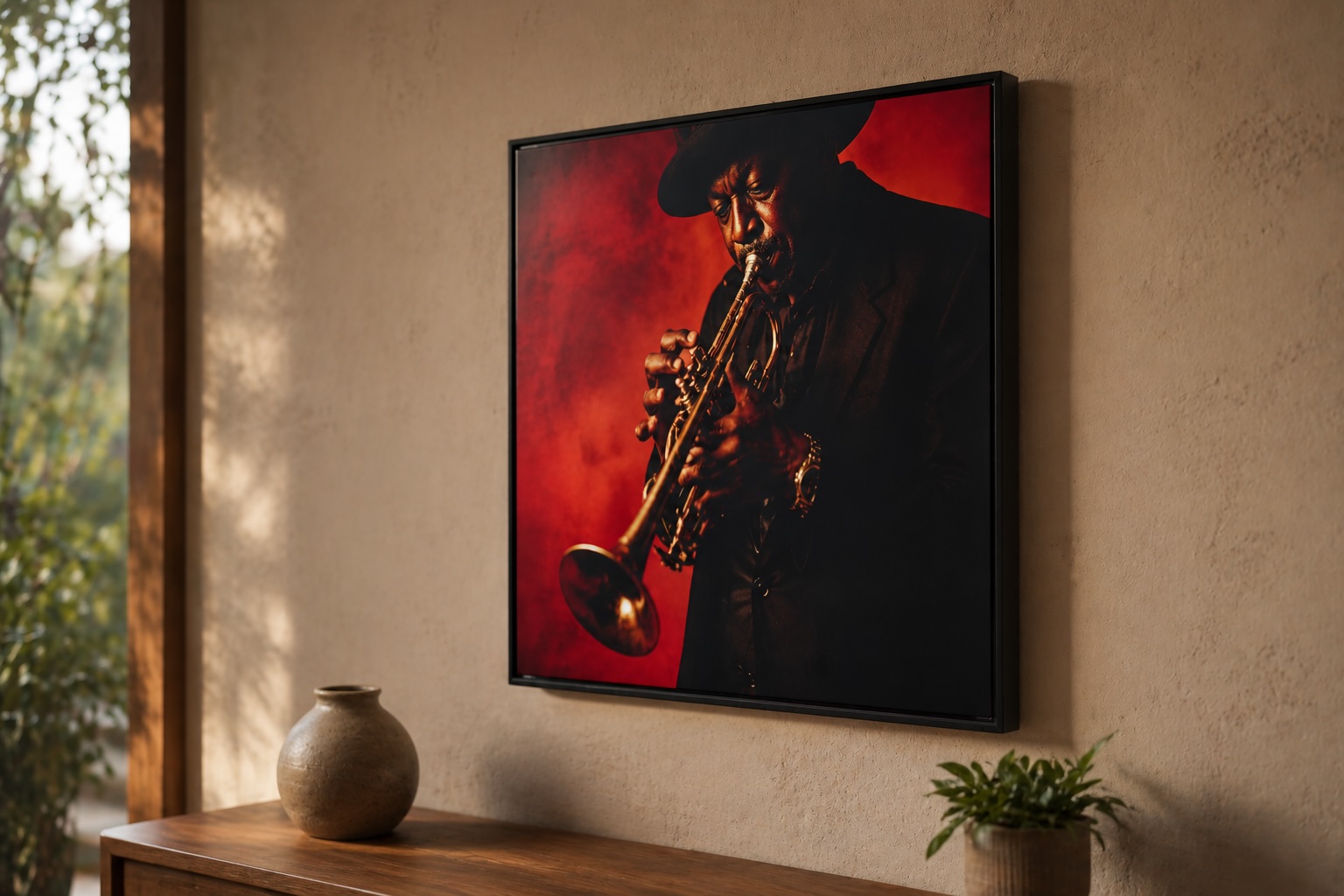
Cover art was always meant to be this size. MUSEE is the first object built around that fact.
Pair Spotify or Apple Music once. MUSEE listens for what's playing — nothing more.
The cover fills the wall. Every detail the photographer intended — nothing the algorithm compressed out.
Silence doesn't reset the wall. The last cover holds, like a record left on the shelf, sleeve out.
Tell us the album that should be on the wall when the box is opened. We load the file before it leaves us. Nothing to set up. Nothing to wait for.
By the time you've folded the linen wrap, the record you've been thinking about is already there, the size of a 12-inch sleeve, lit by your room.
The greatest album covers were designed to be seen at 12 inches. For twenty years, you've seen them at one.
The LP gave cover art its canvas. Blue Note hired the best photographers of the era. Hipgnosis built entire visual worlds. That work was made to be experienced at scale — held in two hands, studied, felt.
Streaming compressed it to a thumbnail. The Samsung Frame is the wall when nothing's happening — MUSEE is the wall when music is, and that distinction is worth building a product around. We source from label-supplied masters and archival scans: the file the art director signed off on, displayed at 20 × 20 inches — the size it was made to be seen.
No physical product has ever championed cover art like this. That's the point.